The Next 20 Years
Explore what AI, autonomy and human expertise could mean for the next twenty years.
Twenty years ago, the challenge was getting reliable information out of the field.
Today, that information can move around an operation in real time.
Twenty years from now? That’s a little harder to predict.
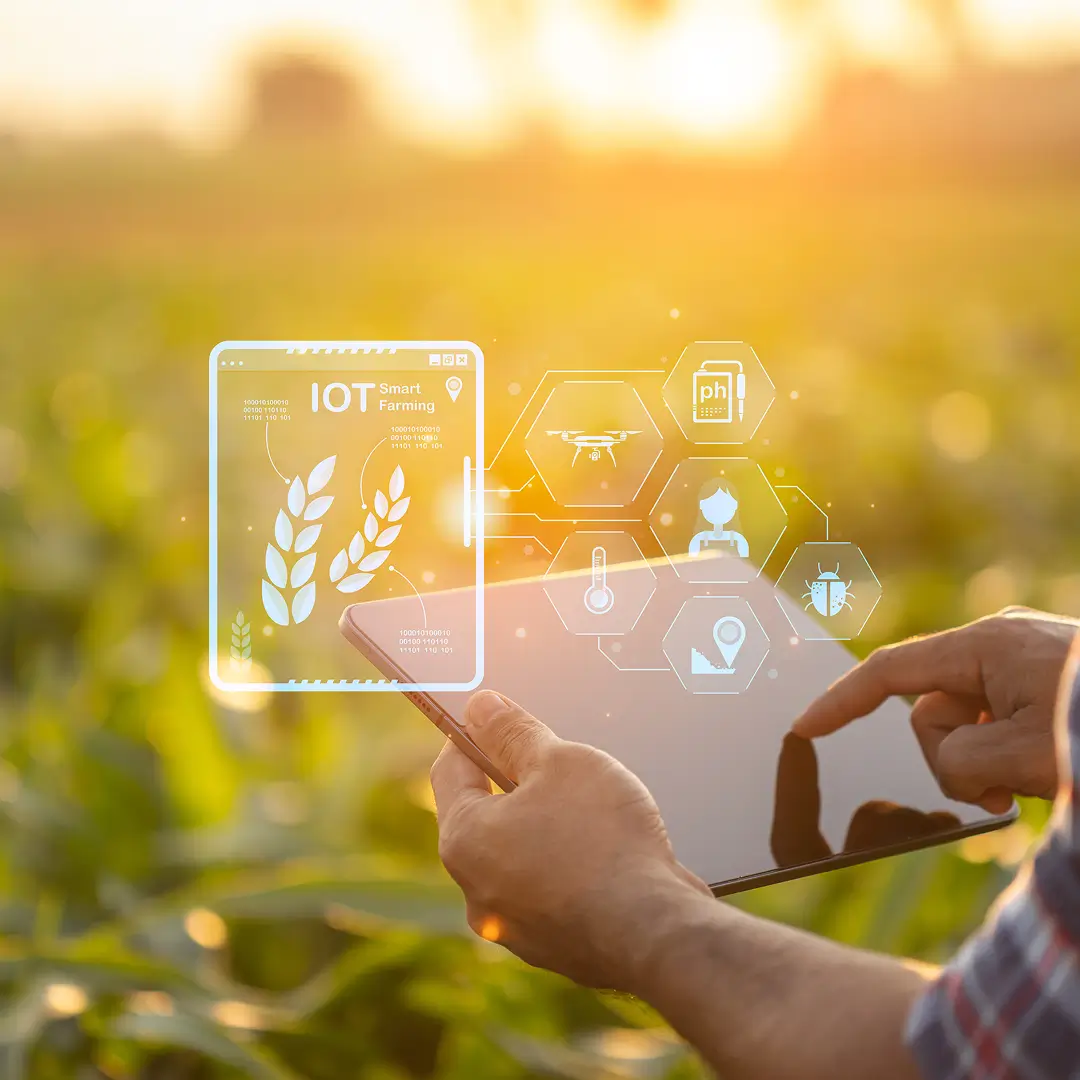
Artificial intelligence, automation and autonomous machinery are already changing what’s possible. Machines are beginning to do more of the physical work, software is processing more information, and increasingly sophisticated technology is finding its way into fields, orchards, aircraft and vehicles.
But ask Tabula CEO Michael Whittaker what he thinks should remain at the centre of all that change, and his answer is decidedly less technical.
People.
From disconnected to real time
For Michael, connectivity has been the defining change in field operations over the past twenty years.
“Twenty years ago, operations were largely offline and unconnected. Today, we’re operating in a very connected world with real-time communication.”
That connection has changed far more than how information is recorded. Jobs can be allocated without the delays that once existed between office and field. Teams can understand what’s happening as work unfolds. Information can flow between the people planning a job and those completing it.
“Everyone is more efficient because they’re all on the same page in real time,” Michael says.
If connectivity defined the last twenty years, however, something very different is beginning to shape the next twenty.
Welcome to the hybrid world
Autonomy is coming.
In some places, it’s already here.
Michael sees the next phase as a hybrid world, where autonomous technology and human expertise increasingly work alongside each other.
“For a reasonable period of time, companies will have to balance both. There aren’t autonomous roadmaps throughout entire organisations yet, so it’ll be a hybrid world for a while.”
An autonomous sprayer, for example, might be capable of completing the physical work. But a human operator brings something else to the job: observation, judgement and an understanding of what’s happening around them.
Today, much of autonomy is focused on doing the work. The next step is increasingly about the decisions surrounding it.
“More and more AI will be processing data and coming to conclusions,” Michael says. “But we’ll always remain human beings. There’ll always be a human factor, and that’ll never go away.”
That creates one of the biggest challenges of the coming decades: working out where autonomy ends and human judgement begins, and how the two operate together safely, efficiently and within increasingly complex compliance and regulatory environments.
Technology still has to solve a real problem
Of course, predicting the future is one thing… Building technology that’s genuinely useful is another.
For all the excitement around AI and autonomy, Michael believes the same principle that shaped Tabula’s earliest products still applies.
“Regardless of what we invest in, every investment has to solve a practical problem for a customer today.”
That means emerging technology can’t simply be added because it’s new. It needs to make an operation safer, more efficient or more profitable, without creating another layer of complexity for the people expected to use it.
And sometimes progress isn’t a dramatic new invention at all.
Small improvements compound. A better workflow here, less duplication there, a task that takes a little less time every day. Across an entire operation and an entire year, those incremental gains can become significant.
For Tabula, that’s as much a part of innovation as whatever comes next.
Backing the right horse
As businesses become more dependent on technology, choosing who provides it becomes a bigger decision too.
Michael describes that decision with one word.
“Belief.”
“They’re investing in belief. It’s as simple as that. A partner has to have belief in the industry and belief in the future.”
For Michael, a long-term technology partner should be invested in more than its own products. It should understand where an industry is heading, continue investing as new opportunities emerge and help its customers take advantage of them.
“Organisations are relying more and more on technology to solve their problems, so it has to be reliable. It’s about believing that your partner will protect you along the journey.”
After twenty years of continual change, Michael believes Tabula has earned some of that trust.
“We’ve proven ourselves to be the right horse to back. We invest in emerging technologies and we’re committed to continually evolving.”
People still do business with people
For all the technology likely to shape the next twenty years, Michael keeps coming back to the same point.
“Robots don’t do business with robots. People do business with people.”
It’s a deliberately simple way of describing something that could become increasingly important.
Tabula’s role won’t simply be to connect autonomous machinery, AI and increasingly sophisticated systems. It will be to make that technology useful to the people running real operations and serving real customers.
“We have to support our customers in doing business with their customers in a human context,” Michael says. “We can provide the technology and autonomy behind the scenes to help them deliver in the most cost-efficient and profitable way, but people have to stay front and centre.”
For Michael, that’s an important distinction. The technology behind an operation may become increasingly autonomous, but the relationships around it remain fundamentally human.
Keeping people at the centre of that change will be just as important as the technology itself.
What will we be talking about in twenty years?
So what does success look like from here?
Not another piece of technology. Not a particular number of autonomous machines. Not even predicting exactly what field operations will look like in 2046.
For Michael, one of the best measures would be much simpler: that the relationships Tabula has built with its customers today are still going strong twenty years from now.
He pictures that future fittingly.
“If we were sitting around the kitchen table having a cup of coffee in twenty years, I’d like to think the conversation would be about how our partnership has withstood twenty years.”
By then, some of the people around that table may have changed too.
“We might be working with the son instead of the father. But I’d like them to look back and feel that twenty years earlier, they backed the right horse.”
There’s something fitting about that picture.
Twenty years ago, Tabula’s story began with Colin Brown trying to solve a practical problem for people working in New Zealand agriculture. From those early conversations, demonstrations and first installations came technology that would eventually connect operations across industries and around the world.
Nobody sitting around a kitchen table in 2006 could have predicted every step that followed.
We can’t predict every step of the next twenty either.
But we know what we want to keep doing: solve real problems, evolve alongside the industries we serve and make sure that as technology becomes more capable, the people using it remain at the centre.
The technology will change.
The people will remain.
And twenty years from now, hopefully we’ll still be sitting around that table together.
This was the final article celebrating Tabula’s twentieth year of connecting field operations. Click here to return to the timeline and view the full picture.

I was slightly nervous at the start, to be honest, until the orders started ramping up.
Getting the contract with Weallans, the largest ground spreading operation in New Zealand, and other large contractors gave us confidence. Once it started ramping up, things moved pretty quickly.